Use PAA code for APLIC Conference Reservations

The APLIC conference is coming up in about 10 weeks !

If you haven’t yet made hotel reservations, it’s a good idea to do so as soon as possible, even if you’re not sure you’ll be able to make the trip.

The hotel requires 24 hours notice of any cancellations, so you have plenty of time to cancel if something prevents you from attending.

When reserving space at the conference hotel, use the code PAAPAAA in the “groups” box in order to enjoy the conference rate.

I did some digging around when making my reservations two days ago and found rates for the Boston metro area to be very, very expensive. The Boston Marathon runs just one week before our event.

Leave a Comment

APLIC in Boston – Save the date!

APLIC in Boston: Exploring the collaborative common ground

The Brewer Fountain

47th APLIC Annual Conference
April 28-30, 2014
at the
Marriott Copley Place
Boston, Massachusetts

At its Fall 2013 meeting, hosted by the Center for Communication Programs, Johns Hopkins University, Baltimore, MD, the APLIC Board explored potential topics for our 47th annual conference. Sessions focusing on social KM, collaborative tools, and other common interests were discussed, and we’ll keep you informed as the program develops.

If you have any suggestions about a topic or issue that is highly relevant to our work as information professionals in the population studies arena, please communicate with Debra Dickson.  I look forward to seeing you in Boston.

Leave a Comment

Mouth, watering

One thing I have noticed since I started hanging out with APLIC folks back in 2009 is that they know how to eat well. In 2010 it was Local, in Dallas; in 2011 it was Zaytinya, in Washington DC; in 2012 it was Osha Thai.

APLIC members at banquet

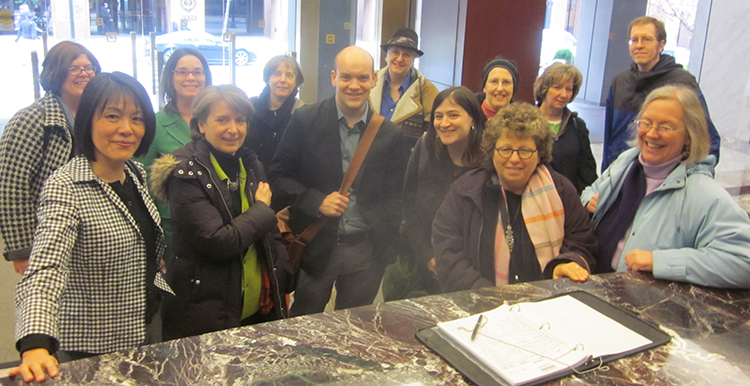
Happy diners at Osha Thai in San Francisco

Word is just in from our Conference banquet and tour team that this year’s banquet will be held at one of New Orleans’ signature dining spots, Mr. B’s Bistro. (Check out the review on CityEats.)

Interior of Mr. B's Bistro

Mr. B’s Bistro
photo: CityEats

We’re beginning to get blurbs on the talks, too, so you may want to visit the Conference Program page and see how things are developing.

We come to learn things, of course. Still, it’s really all about the people.

Urban Institute visit

APLIC members visit the Urban Institute in Washington DC, 2011

See you there.

Leave a Comment

Jazz it up – Save the date !

Jazzing it up: hit the high notes with new tools and skills
46th APLIC Annual Conference
April 8-10
New Orleans, Louisiana
At its Fall meeting, hosted by Allison Burns and FHI 360 in Durham, North Carolina, the APLIC board explored potential topics for our 46th annual conference. Based on feedback from the 2012 event in San Francisco, it was clear that sessions focusing on what peers are doing and what tools peers find useful are very meaningful, and they will be continued this year.
Numerous other ideas were examined, and we’ll keep you informed as the program develops. If you have any suggestions about a topic or issue that is highly relevant to our work as information professionals in the population studies arena, please communicate with Allison Burns.
I look forward to seeing you in New Orleans.

Leave a Comment

Capturing business intelligence required for targeted marketing, demonstrating value, and driving process improvement

Title may not seem relevant to us, but the highlights are of interest:

â–º Students using library resources more frequently perform better academically on average. â–º Inexperienced students tend to gain more than their experienced counterparts. â–º Males use electronic resources less, but benefit more than females when they do use e-resources. â–º Many students never borrow print material. â–º Print material has a lesser impact on academic performance than electronic.

Published in: Library & Information Science Research   Volume 34, Issue 4,  Pages 247-332, October 2012


Leave a Comment

Toward knowledge access for all: Brewster Kahle and the Internet Archive

Internet Archive logoPrior to attending the 2012 APLIC Conference, I was only partly aware of Brewster Kahle and his work with the Internet Archive Project (IAP). I knew that he was the person behind one of my favorite resources on the Web: the Internet Archive’s Wayback Machine. I’ve used this valuable tool for both work and leisure when seeking out historic website pages now missing from the Web. But while listening to his presentation at the conference, I soon realized that the Wayback Machine is just a tiny part of his vision.

What I wasn’t fully aware of is Brewster’s infectious passion for the idea of “universal access to all knowledge.” The no-frills Internet Archive website belies this passion. Don’t get me wrong; I understand why the website is text-heavy and light on design (quicker load-time and less distraction from the content). I just never took the time to poke around on the site and read more about the Archive’s mission, and I felt bad about that in retrospect. After hearing Brewster speak, though, I suspect he would care less about whether people know why the Internet Archive exists and more about if they know it exists at all. Certainly its underpinning philosophy drives the project, but end users don’t need to dwell on that to benefit. The important thing is that people know this amazing resource is available online and free of charge.

I think it’s safe to say that all librarians support the idea of facilitating access to information. That is essentially our job description in a nutshell. But Brewster’s take on it is different from the traditional librarian-as-intercessor model. Placing an entire library online, freely accessible to the public, minimizes this traditional role of a librarian. It gets at the heart of what seems to be a shift in the roles we as librarians play in modern information discovery. These days we are at a crossroads in librarianship: should we continue to provide access to print materials for on-site patrons or do we move toward shuttering our physical doors and fully embracing digital collections as the libraries of the future, opening them up online to the world?

In his presentation, Brewster made the case that the cost of digitizing a library’s collection is the same as the cost of constructing a building to house that collection. And yet a digital collection can be made available to an exponentially larger audience. To this end, Brewster is asking libraries to digitize their collections and send the files to be included in his digital library. The University of Toronto has already donated 250,000 scanned books! For books still under copyright, online patrons can check them out from the Ebook and Texts Archive on archive.org (a copyrighted book can only be checked out by one user at a time, just like in a traditional library). However, those books in the public domain don’t require a check-out process and can be enjoyed simultaneously by multiple users.

How each library decides to move through the crossroads will vary. Some libraries are indeed closing their doors and devoting all their attention to online services. Patron demand can dictate this in certain cases. However, I think that for the majority of libraries, a compromise is the more likely route. Traditional libraries can still keep their doors open to meet the needs of walk-in patrons, but they can also reach a wider global audience by turning over digital copies of their collections to the IAP. The Project will even loan out its state-of-the-art scanning equipment to help achieve this goal. Together we can help build the biggest online library in the world. It seems like a win-win situation, with everyone benefiting from increased access to information. Why shouldn’t we have the best of both print and digital worlds?

Leave a Comment

Conference keynoter Kahle thinks big

Lori Delaney points us to a New York Times article featuring the titanic vision of Brewster Kahle. One interesting quote : “A lot of libraries are doing some pretty drastic weeding. . . .”

You’ll have the opportunity to hear Mr. Kahle and ask questions pertinent to your own operations at the APLIC 45th Annual Conference.

See you in SF !

Comments (1)

Twitter citations ? MLA’s got your back

Alexis Madrigal over at The Atlantic reports that MLA has come up with a standard form for citing tweets. Maybe not mission-central, but nice to know. . . .

Leave a Comment

2012 Conference Registration

The conference registration form is now up and available for download.

Early-bird rate for registration ends on March 30. That may seem like a long way off, but remember that hotel and air rates may change as the date gets closer.

We’ll post some profiles about our speakers as well as updates in the weeks to come . . . stay tuned.

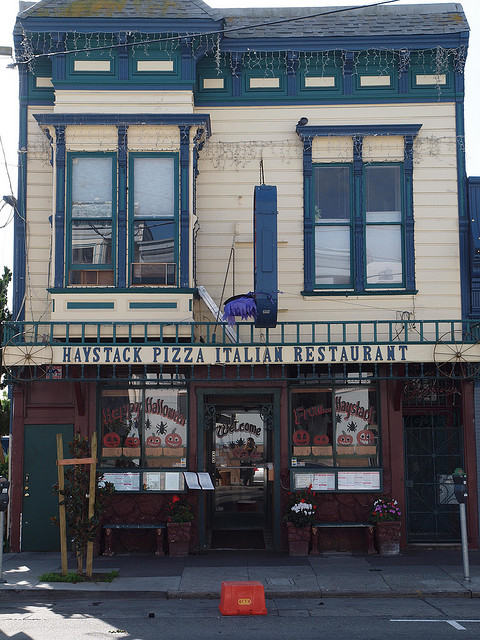
Haystack Italian restaurant in SF

Photo: Franco Folini

Leave a Comment

San Francisco – here I come !

Changing of the guardThe APLIC conference is always a great time to catch up with old friends and learn what colleagues are up to, and the sessions help to keep perspective on substantive issues as well as questions about our craft as information specialists.
Ok – you know the drill.
This year, however, we also get to have all of this in one of the world’s most beautiful cities : San Francisco, California.
View of San Francisco from Kite HillPersonally, I’ll take a couple extra days to enjoy the SF night life in Chinatown, say hello to Coit Tower, revisit memories in Golden Gate Park, and just enjoy a city that never stops posing for a perfect photo.
As we get closer to April 30, May 1-2, we’ll post items about interesting activities, sightseeing, and entertainment opportunities in and around this great town.
What would you like to do or see while you’re visiting San Francisco ? – let us know in the comments.

Beach near SF with bird

These images come from a superb Flickr stream of California images by Franco Folini, who shows himself to have a wonderful, sensitive eye.

Leave a Comment